






















Choosing a sandbox runtime for long-lived coding agents
How we evaluated sandbox providers for coding agents, what we chose for now, and the trade-offs behind that decision.
orchestrators
ZenML is a lightweight alternative to Kubeflow, the Kubernetes-native platform for machine learning. While Kubeflow offers robust orchestration capabilities for ML workflows on Kubernetes, ZenML provides a more flexible and user-friendly approach to building, deploying, and managing ML pipelines at scale. ZenML's intuitive workflow management simplifies MLOps across various environments, not just Kubernetes. Leverage ZenML's adaptability and ease of use to accelerate your ML initiatives and drive innovation across your organization, without the steep learning curve and infrastructure demands of Kubeflow.
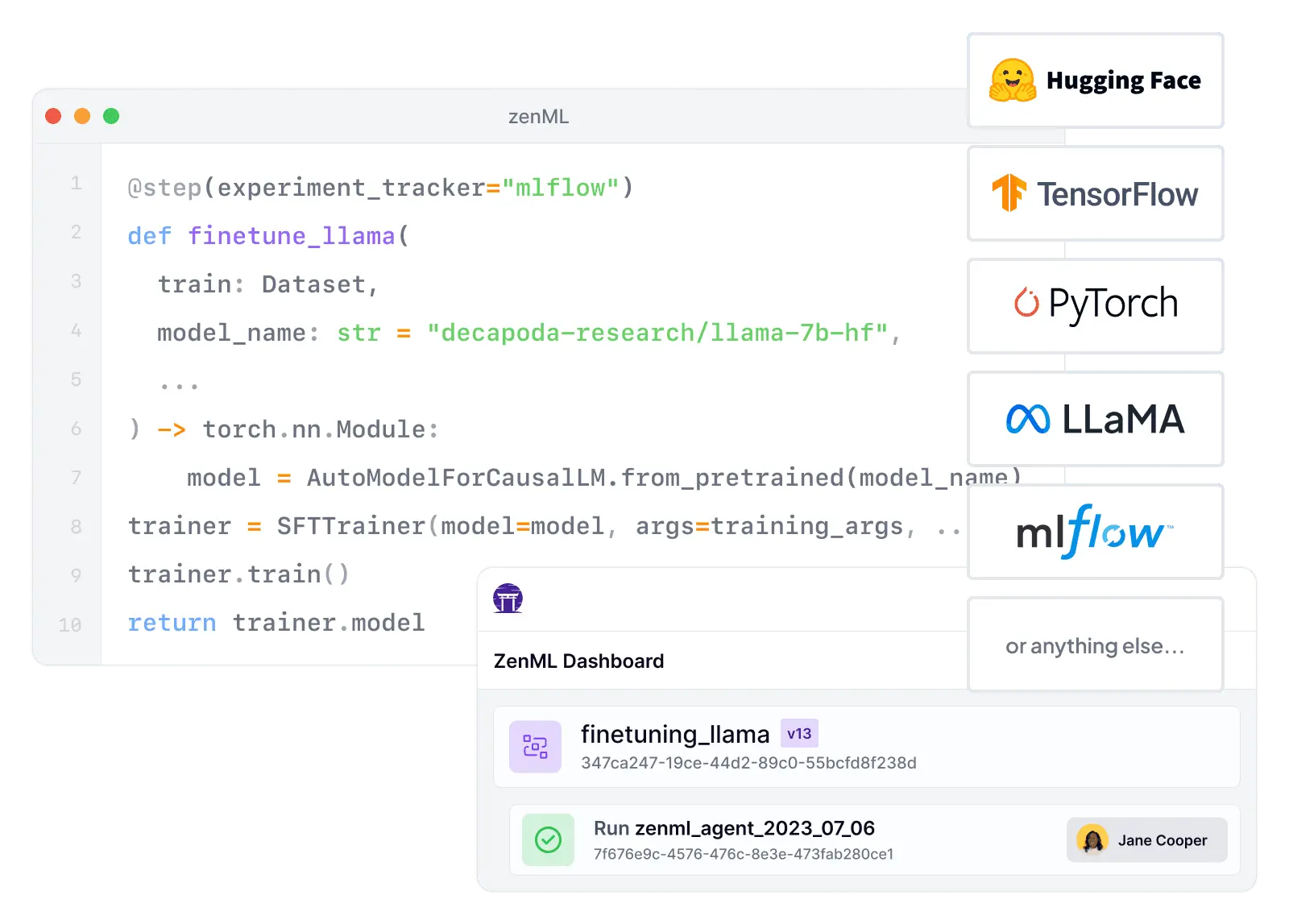
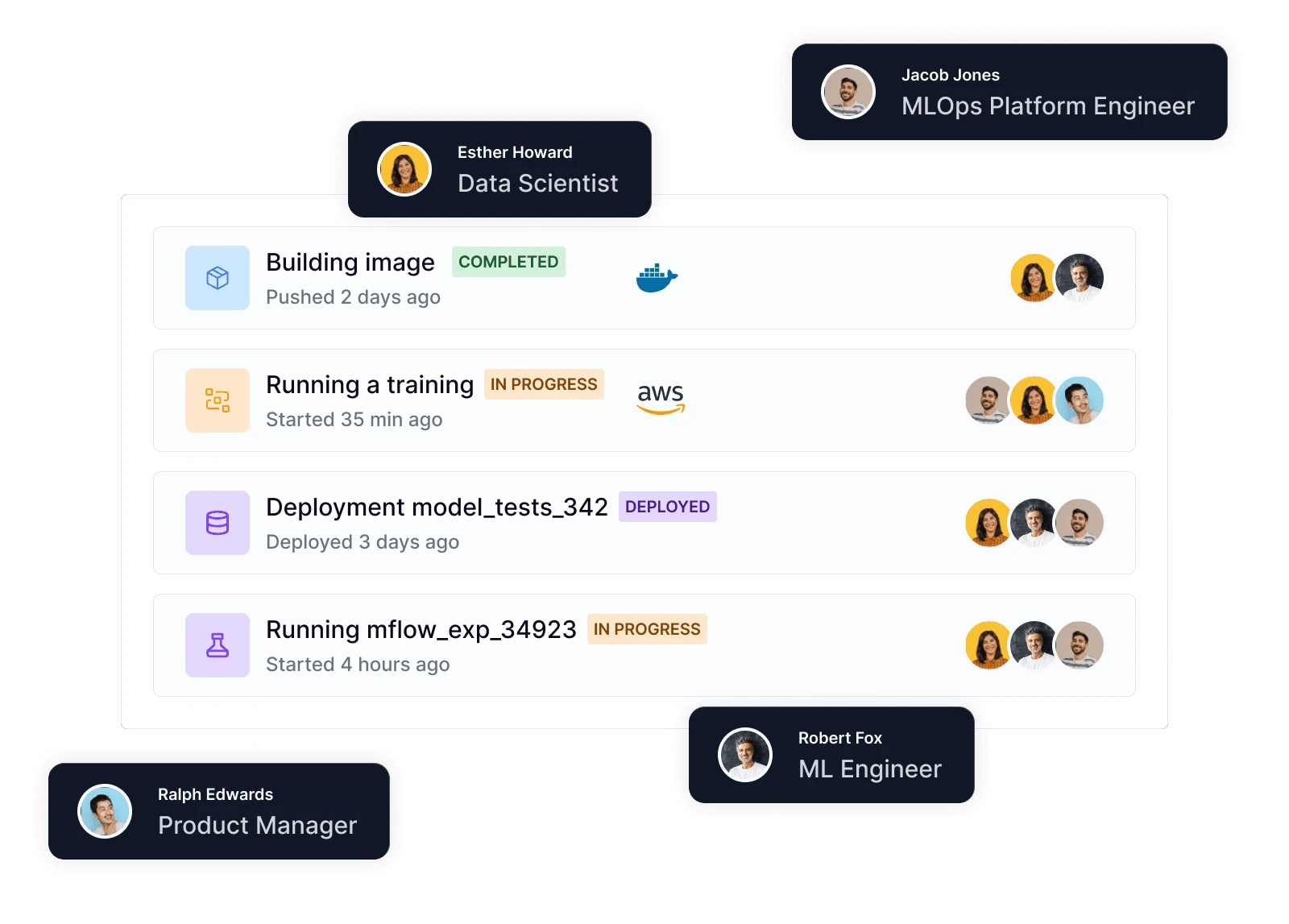
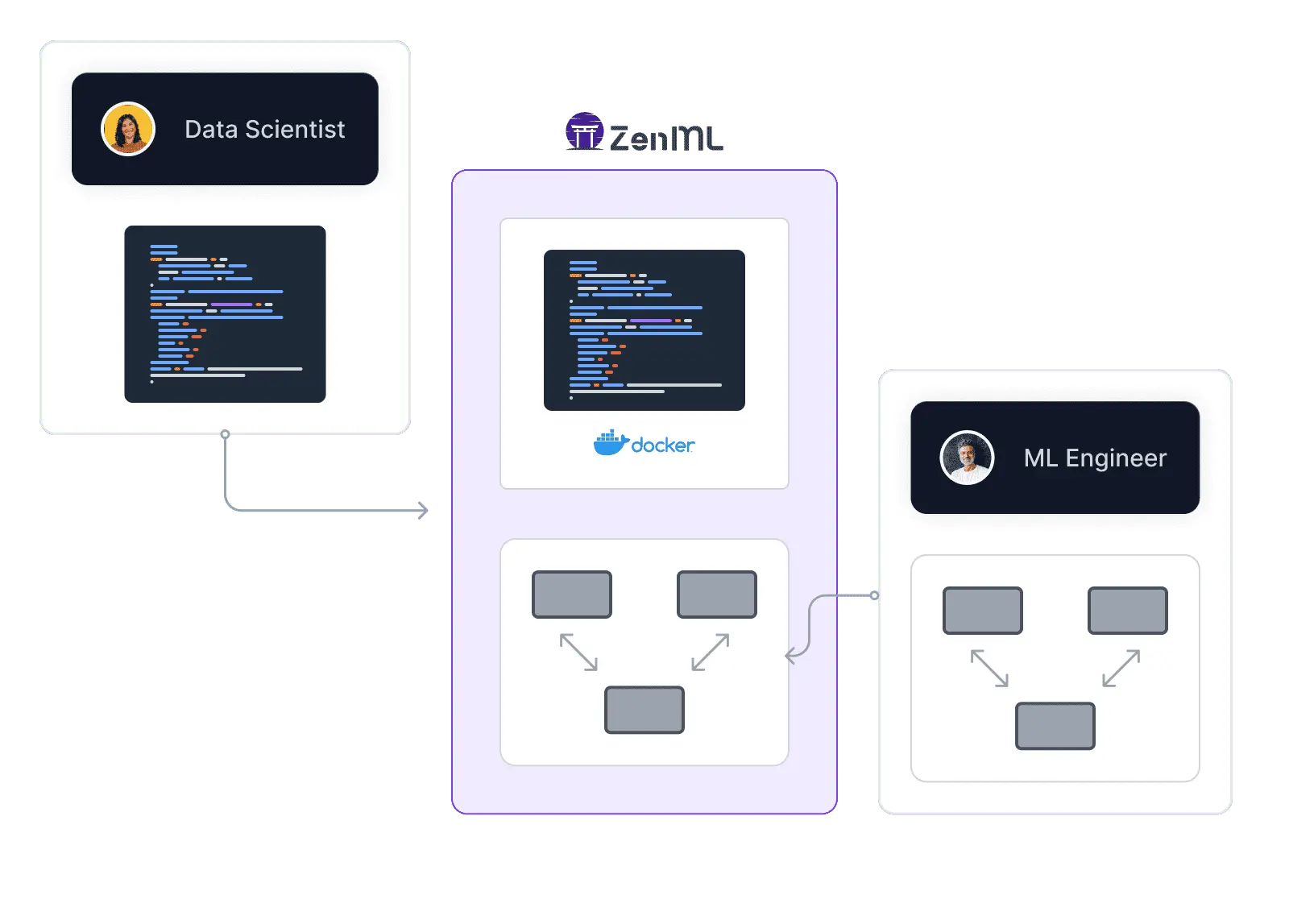

After a benchmark on several solutions, we choose ZenML for its stack flexibility and its incremental process. We started from small local pipelines and gradually created more complex production ones. It was very easy to adopt.

Clément Depraz
Data Scientist at Brevo
| Feature | ZenML | Kubeflow |
|---|---|---|
| Workflow Orchestration | Yes Provides a flexible and user-friendly orchestration layer on top of Kubeflow | Yes Offers powerful Kubernetes-native orchestration for ML workflows |
| Ease of Use | Yes Simplifies the adoption and management of Kubeflow pipelines with an intuitive interface | Not supported Requires Kubernetes expertise to effectively utilize its features |
| Integration Flexibility | Yes Seamlessly integrates Kubeflow with other MLOps tools for a customized stack | Not supported Primarily focuses on Kubernetes-based integrations and extensions |
| Switch your orchestrator, keep your code | Yes Keep the same code when switching orchestrator | Not supported Requires significant rewriting to use Kubeflow code with a different orchestrator |
| Pipeline Customization | Yes Enables easy customization and extension of Kubeflow pipelines | Yes Allows customization but may require more Kubernetes knowledge |
| Collaborative MLOps | Yes Facilitates collaboration among teams with version control and governance features | Yes Provides collaboration features but may require additional setup |
| Scalability | Yes Leverages Kubeflow's scalability while providing an abstraction layer for ease of use | Yes Highly scalable for large-scale ML workflows on Kubernetes |
| Experiment Tracking | Yes Integrates with MLflow and other tools for comprehensive experiment tracking | Yes Offers Kubeflow Metadata for experiment tracking and artifact management |
| Model Deployment | Yes Simplifies the deployment of models using Kubeflow with pre-built integrations | Yes Supports various deployment options, including Kubeflow Serving |
| Monitoring and Logging | Yes Provides centralized monitoring and logging for Kubeflow pipelines | Yes Offers Kubeflow Metadata for logging and monitoring |
| Community and Support | Yes Growing community with active support and resources | Yes Large and active community with extensive resources and support |
| MLOps Lifecycle Coverage | Yes Covers the entire MLOps lifecycle, from data preparation to model monitoring | Not supported Focuses primarily on orchestration, deployment, and serving |
| Learning Curve | Yes Reduces the learning curve for adopting Kubeflow with a user-friendly abstraction layer | Not supported Requires Kubernetes expertise to effectively utilize its full set of features |
| Hybrid and Multi-Cloud | Yes Supports hybrid and multi-cloud deployments with Kubeflow integration | Yes Enables hybrid and multi-cloud deployments on Kubernetes |
| GPU and Distributed Computing | Yes Seamlessly leverages Kubeflow's GPU and distributed computing capabilities | Yes Provides strong support for GPU and distributed computing workloads |
Code comparison
# zenml integration install kubeflow
# zenml orchestrator register kf_orchestrator -f kubeflow ...
# zenml stack update my_stack -o kf_orchestrator

from zenml import pipeline, step

@step
def preprocess_data(data_path: str) -> str:
    # Preprocessing logic here
    return processed_data

@step
def train_model(data: str):
    # Model training logic here
    return model

@pipeline
def my_pipeline(data_path: str):
    processed_data = preprocess_data(data_path)
    model = train_model(processed_data)

# Run the pipeline
my_pipeline(data_path="path/to/data")# Kubeflow Pipelines SDK
import kfp
from kfp import dsl
def preprocess_op(data_path):
return dsl.ContainerOp(
name='Preprocess Data',
image='preprocess-image:latest',
arguments=['--data_path', data_path]
)
def train_op(data):
return dsl.ContainerOp(
name='Train Model',
image='train-image:latest',
arguments=['--data', data]
)
@dsl.pipeline(
name='My ML Pipeline',
description='A sample ML pipeline'
)
def my_pipeline(data_path: str):
preprocess_task = preprocess_op(data_path)
train_task = train_op(preprocess_task.output)
# Compile and run the pipeline
kfp.compiler.Compiler().compile(my_pipeline, 'pipeline.yaml')
client = kfp.Client()
client.create_run_from_pipeline_func(my_pipeline, arguments={})ZenML guarantees swifter initialization, surpassing orchestrators for prompt, optimized ML workflows.
ZenML is a native interface to the whole end-to-end machine learning lifecycle, taking you beyond just orchestration.
ZenML excels with dedicated support, offering personalized assistance beyond standard orchestrators.
Orchestrator Showdown

ML-optimized workflow management. Enhance scalability and usability with comprehensive features designed for ML pipeline orchestration.

ZenML is an open-source alternative to Argo Workflows for ML pipelines with built-in metadata, lineage, and reproducibility

Dagster alternative: Streamline ML ops with intuitive pipelines. Seamless integrations and experiment tracking for efficient ML workflow management.
Databricks alternative: Flexible ML orchestration without vendor lock-in. Accelerate ML with lightweight, adaptable workflows across multiple clouds.

Flyte alternative: Agile ML pipeline orchestration. Accelerate workflows with intuitive tools, seamless MLOps integration, and rapid iteration.

Kedro alternative: Scalable, user-friendly ML framework. Streamline operations with robust features for efficient project management and deployment.

Prefect alternative: ML-centric pipeline orchestration. Streamline workflows with intuitive design, experiment tracking, and MLOps integrations.
How we evaluated sandbox providers for coding agents, what we chose for now, and the trade-offs behind that decision.
The new Kitaru turns production traces you already collect into replayable test scenarios, expert-reviewed cohorts, and evaluators you can run on every change.
Robotics compute is spreading across clouds and clusters. Learn how one portable pipeline layer can keep the robot-learning loop reproducible.
See ZenML's superior model orchestration in action Discover how ZenML offers more with your existing ML tools Find out why data security with ZenML outshines the rest