





















Choosing a sandbox runtime for long-lived coding agents
How we evaluated sandbox providers for coding agents, what we chose for now, and the trade-offs behind that decision.
e2e-platforms
Discover how ZenML offers a flexible, easy-to-use alternative to Metaflow for orchestrating your machine learning pipelines. While Metaflow provides a straightforward way to build and manage data science workflows, ZenML delivers a more comprehensive MLOps framework that seamlessly integrates with various tools and platforms. Compare ZenML's extensive workflow management capabilities and customization options against Metaflow's opinionated, standalone approach. Learn how ZenML can accelerate your ML initiatives with its adaptable architecture, collaborative features, and robust monitoring capabilities, while still maintaining the simplicity and usability you appreciate in Metaflow.
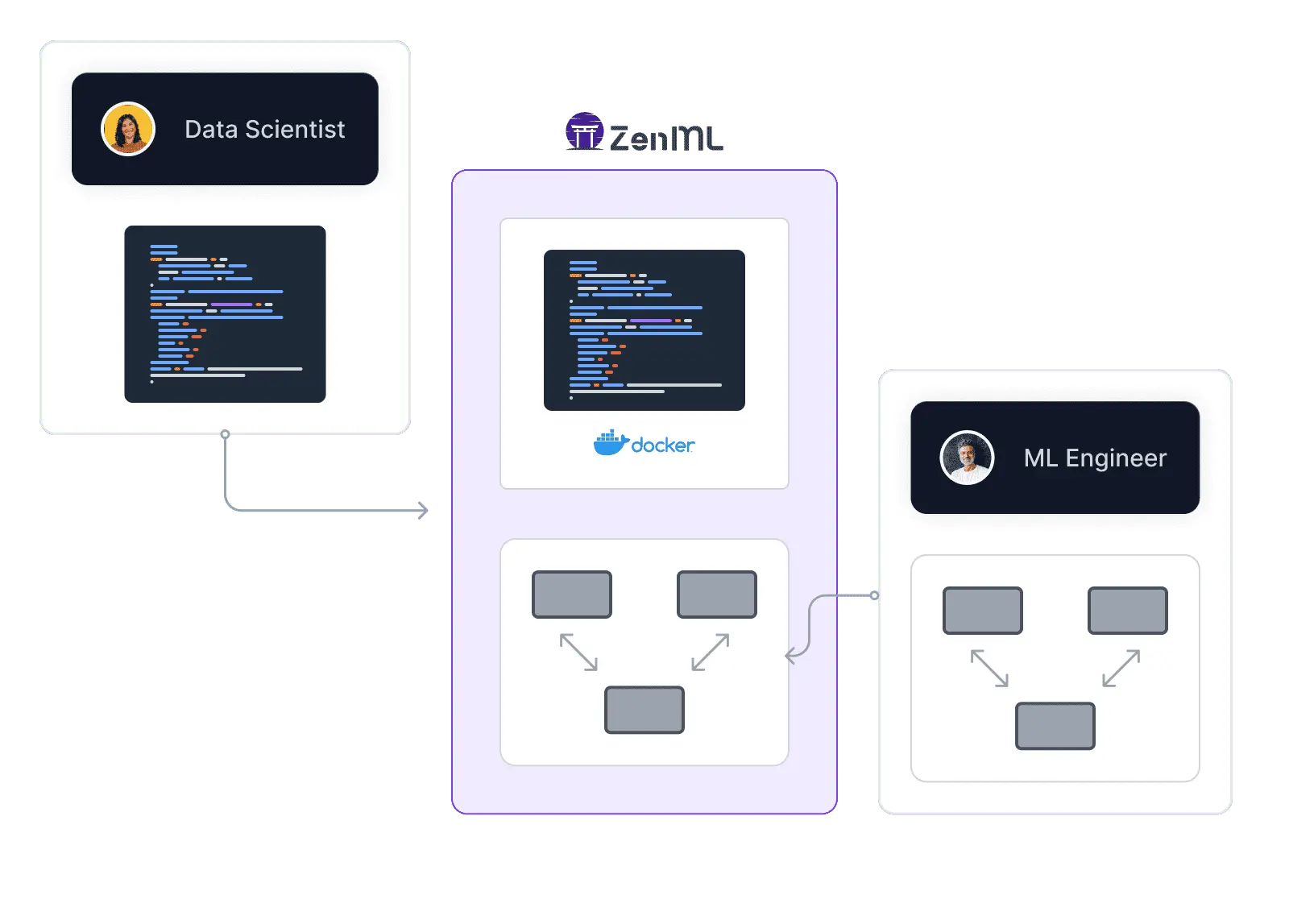
| Feature | ZenML | Metaflow |
|---|---|---|
| MLOps Coverage | Yes Comprehensive MLOps framework covering the entire ML lifecycle | Not supported Primarily focused on workflow management and pipeline orchestration |
| Customization | Yes Highly customizable and extensible to fit specific ML workflow requirements | Not supported More opinionated and rigid workflow structure |
| Integration Flexibility | Yes Seamlessly integrates with various ML tools, platforms, and infrastructure | Not supported Limited integration options beyond the Metaflow ecosystem |
| Collaboration | Yes Enables collaboration through shared pipelines, version control, and experiment tracking | Not supported Lacks built-in collaboration features and relies on external tools |
| Scalability | Yes Supports distributed computing and various compute backends for effortless scaling | Yes Can handle large workloads providing you follow its recommended setup & hardware suggestions. |
| Monitoring | Yes Provides robust monitoring, logging, and alerting features for production pipelines | Not supported Basic monitoring capabilities, requiring external tools for advanced monitoring |
| Ease of Use | Yes Intuitive API and familiar Python syntax for defining pipelines | Yes Simple and straightforward pipeline definition using Python decorators |
| Community | Yes Growing community with active support and contributions | Yes Established community and support from Netflix |
| Portability | Yes Portable pipelines that can run across different environments and platforms | Not supported Pipelines are more tightly coupled to the execution environment |
| Deployment Options | Yes Flexible deployment options, including serverless and containerized environments | Not supported Limited deployment options, primarily focused on AWS Batch |
Code comparison
from zenml import pipeline, step
from sklearn.ensemble import RandomForestRegressor
from sklearn.metrics import mean_squared_error

@step
def ingest_data():
    return pd.read_csv("data/dataset.csv")

@step
def train_model(df):
    X, y = df.drop("target", axis=1), df["target"]
    model = RandomForestRegressor(n_estimators=100)
    model.fit(X, y)
    return model

@step
def evaluate_model(model, df):
    X, y = df.drop("target", axis=1), df["target"]
    rmse = mean_squared_error(y, model.predict(X)) ** 0.5
    print(f"RMSE: {rmse}")

@pipeline
def ml_pipeline():
    df = ingest_data()
    model = train_model(df)
    evaluate_model(model, df)

ml_pipeline()from metaflow import FlowSpec, step, IncludeFile
from sklearn.ensemble import RandomForestRegressor
from sklearn.metrics import mean_squared_error
class MLFlow(FlowSpec):
data = IncludeFile("dataset.csv")
@step
def start(self):
self.df = pd.read_csv(self.data.path)
self.next(self.train_model)
@step
def train_model(self):
X, y = self.df.drop("target", axis=1), self.df["target"]
self.model = RandomForestRegressor(n_estimators=100)
self.model.fit(X, y)
self.next(self.evaluate)
@step
def evaluate(self):
X, y = self.df.drop("target", axis=1), self.df["target"]
self.rmse = mean_squared_error(y, self.model.predict(X)) ** 0.5
self.next(self.end)
@step
def end(self):
print(f"RMSE: {self.rmse}")
if __name__ == "__main__":
MLFlow()ZenML provides a complete MLOps solution, covering the entire ML lifecycle from experimentation to deployment and monitoring, while Metaflow primarily focuses on workflow management and pipeline orchestration.
ZenML's modular architecture allows for extensive customization and integration with your preferred tools and platforms, whereas Metaflow offers a more opinionated and rigid workflow structure.
ZenML enables collaboration among team members through shared pipelines, version control, and experiment tracking, while Metaflow lacks built-in collaboration features and relies on external tools.
With ZenML's support for distributed computing and various compute backends, you can scale your ML workflows effortlessly, whereas scaling in Metaflow requires manual configuration and is more limited in scope.
ZenML provides comprehensive monitoring, logging, and alerting features for production pipelines, ensuring their reliability and performance, while Metaflow offers basic monitoring capabilities and requires external tools for advanced monitoring.
E2E Platform Showdown

Alteryx alternative for ML pipelines: open-source, code-first MLOps with vendor-neutral portability. Build production ML workflows that run anywhere
Vendor-neutral ML orchestration. Build, train, and deploy models across environments with flexible workflows and no cloud lock-in.

Looking for an open-source alternative to Azure ML Pipelines? ZenML builds portable ML pipelines across clouds without vendor lock-in.

ClearML alternative: Flexible MLOps framework with extensive integrations. Accelerate ML development using adaptable architecture and reduced lock-in, while simplifying infrastructure setup.

Dataiku alternative: Open-source MLOps framework with portable Python pipelines and composable stack. Build production ML workflows with vendor-neutral flexibility and best-of-breed tool integration

Domino Data Lab alternative: Open-source MLOps framework with portable pipelines and composable stack. Build production ML workflows with vendor-neutral flexibility and code-first portability

Valohai alternative: Open-source MLOps framework with extensive integrations. Accelerate ML development using Python-based SDK, adaptable architecture, and existing infrastructure, while avoiding vendor lock-in.

ZenML: an open-source alternative to Vertex AI Pipelines that keeps your MLOps stack portable across GCP, AWS, Azure, and on-prem
How we evaluated sandbox providers for coding agents, what we chose for now, and the trade-offs behind that decision.
The new Kitaru turns production traces you already collect into replayable test scenarios, expert-reviewed cohorts, and evaluators you can run on every change.
Robotics compute is spreading across clouds and clusters. Learn how one portable pipeline layer can keep the robot-learning loop reproducible.
Discover how ZenML's comprehensive MLOps framework can streamline your entire ML lifecycle Learn how to create customizable, scalable ML pipelines that seamlessly integrate with your existing tools and infrastructure Explore ZenML's collaborative features and robust monitoring capabilities to ensure the success of your ML initiatives