


























Choosing a sandbox runtime for long-lived coding agents
How we evaluated sandbox providers for coding agents, what we chose for now, and the trade-offs behind that decision.
experiment-trackers
Discover how ZenML and MLflow approach machine learning lifecycle management differently. While MLflow focuses on experiment tracking, model deployment, and maintaining a centralized model registry, ZenML offers a comprehensive end-to-end MLOps framework. ZenML empowers you to effortlessly orchestrate entire ML pipelines, integrate with various tools including MLflow, and provides flexibility across different environments. Experience enhanced workflow management, reproducibility, and efficiency as you navigate the ML lifecycle with ZenML's unified approach, going beyond just experiment tracking to cover the full spectrum of MLOps needs.
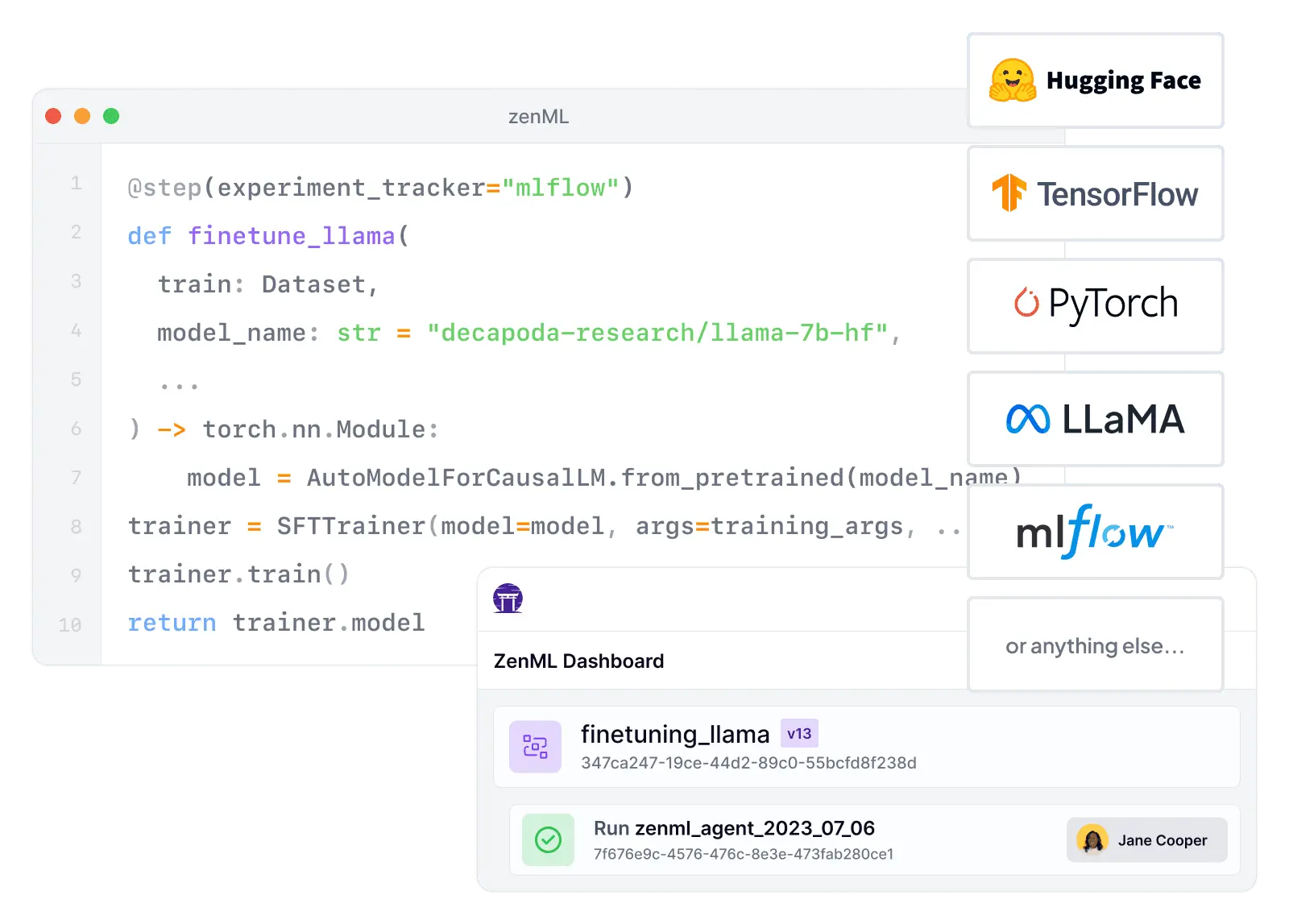
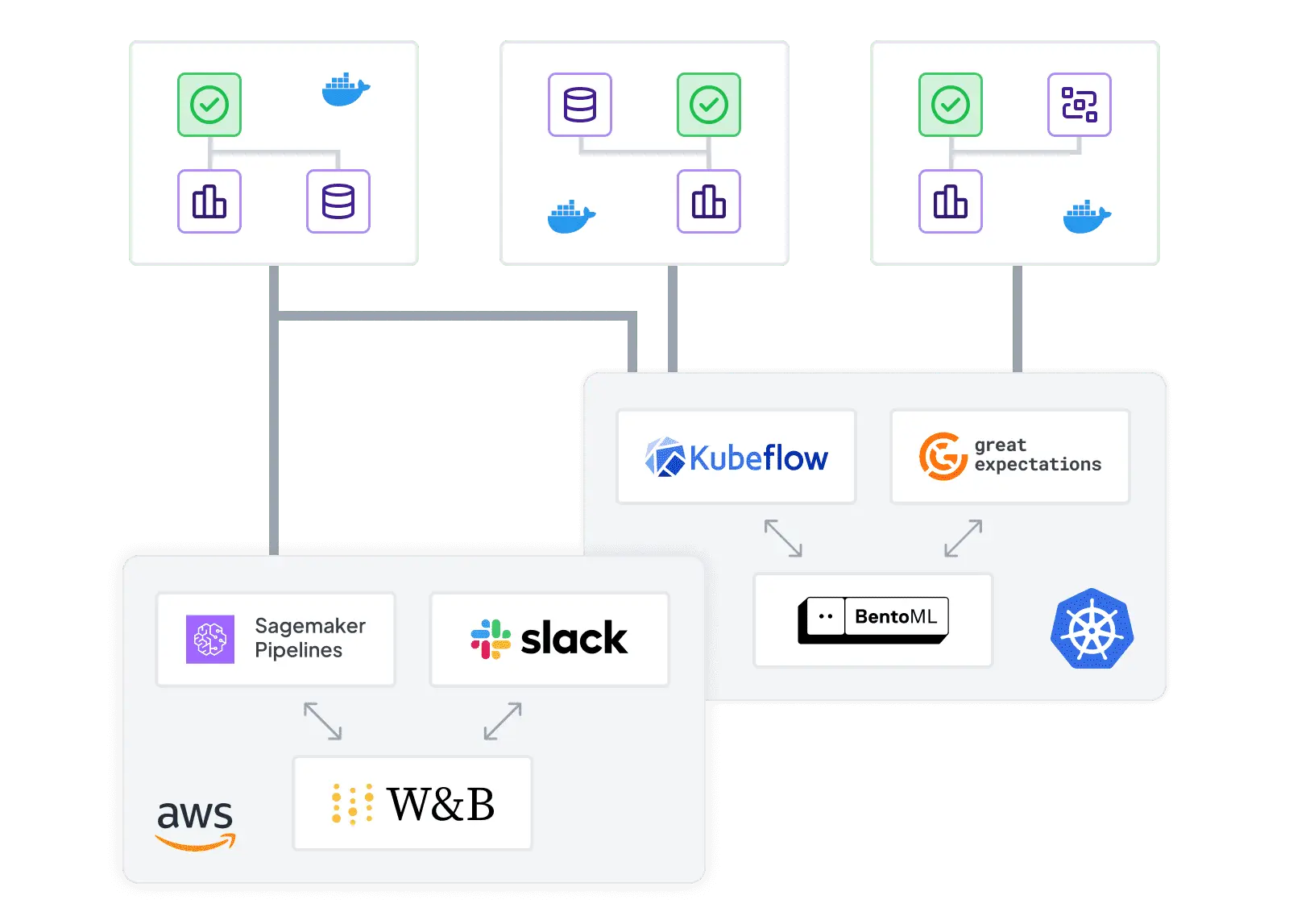
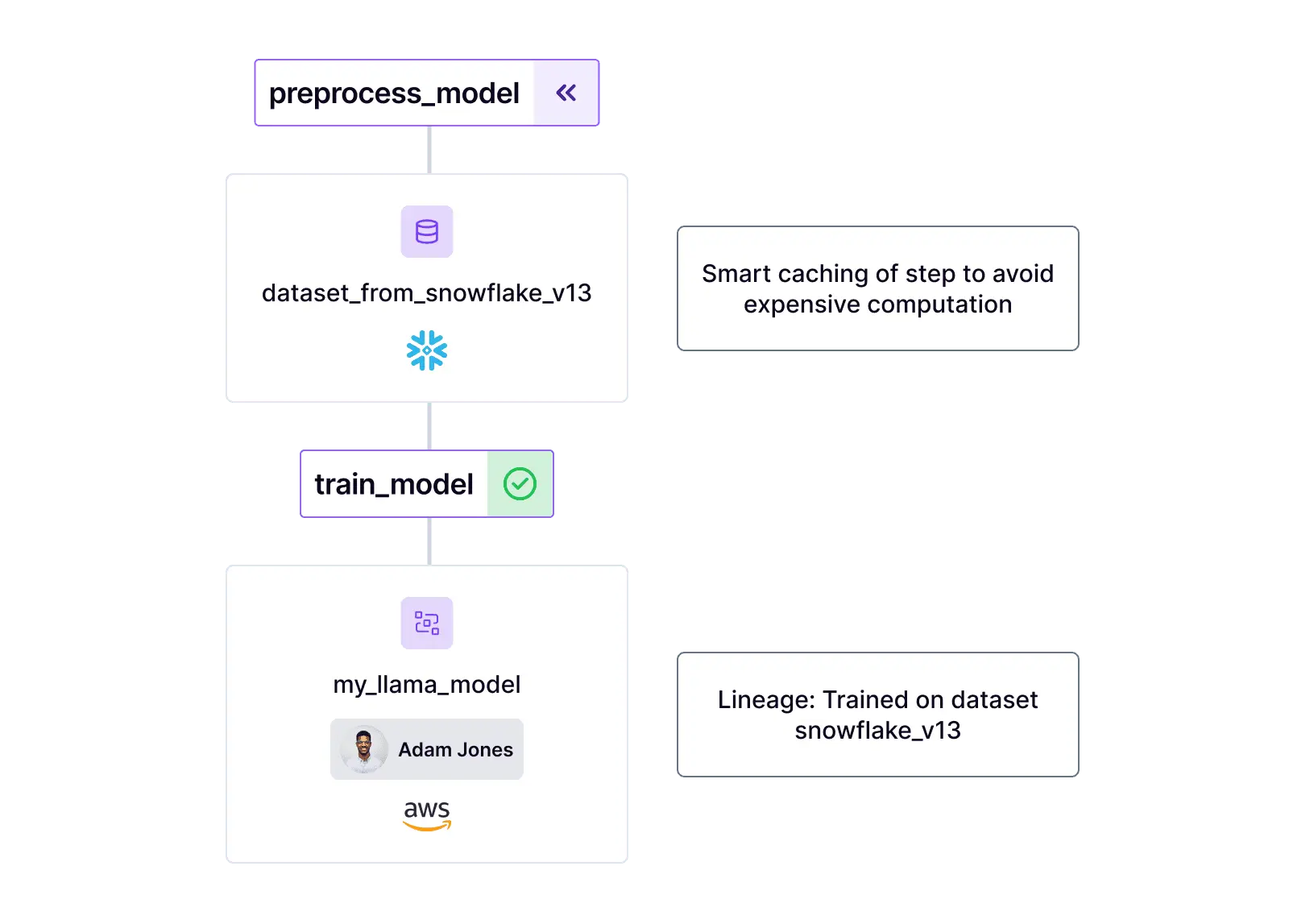
ZenML allows you to quickly and responsibly go from POC to production ML systems while enabling reproducibility, flexibility, and above all, sanity

Goku Mohandas
Founder of MadeWithML
| Feature | ZenML | MLflow |
|---|---|---|
| Experiment Tracking | Yes Integrates with MLflow for detailed experiment tracking | Yes Full experiment tracking capabilities |
| Model Registry | Yes Utilizes MLflow's model registry for model versioning and management as part of full lifecycle | Yes Offers a centralized model registry for model versioning and management |
| Model Deployment | Yes Simplifies model deployment with MLflow integration | Yes Supports model deployment to various platforms |
| Pipeline Orchestration | Yes Provides a flexible and extensible pipeline orchestration framework | Not supported Limited built-in pipeline orchestration capabilities |
| Data Versioning | Yes Comprehensive data versioning and management | Not supported No built-in data versioning functionality |
| Workflow Management | Yes End-to-end workflow management for the entire ML lifecycle | Not supported Focuses primarily on experiment tracking, model registry, and deployment |
| Tool Integration | Yes Seamlessly integrates with a wide range of MLOps tools, including MLflow | Yes Integrates with various ML frameworks and libraries |
| Collaboration | Yes Facilitates collaboration among team members throughout the ML lifecycle | Yes Enables collaboration through experiment tracking and model sharing |
| Customizability | Yes Highly customizable and extensible to fit specific project requirements | Yes Customizable to some extent, but may require additional development effort |
| UI/UX | Yes Provides an intuitive and user-friendly interface for managing ML workflows | Yes Offers a web-based UI for experiment tracking and model management |
| Community and Support | Yes Growing community with active support and resources | Yes Large and active community with extensive resources and support |
| Scalability | Yes Designed to scale with the growth of your ML projects and team | Yes Scalable experiment tracking and model registry capabilities |
| MLOps Coverage | Yes Covers the entire MLOps lifecycle, from data preparation to model monitoring | Not supported Focuses primarily on experiment tracking, model registry, and deployment |
| Integration Flexibility | Yes Allows integration with various orchestrators, data stores, and deployment targets | Yes Integrates with some popular ML frameworks and libraries |
| Learning Curve | Yes Easy to set up and get started, but supports the full complexity and features offered by MLflow | Yes Relatively easy to get started with, especially for experiment tracking |
Code comparison
# zenml integration install mlflow
# zenml experiment-tracker register mlflow_tracker -f mlflow ...

from zenml import pipeline, step
from zenml.integrations.mlflow.experiment_trackers import MLFlowExperimentTracker
from zenml.client import Client

@step(experiment_tracker="mlflow_tracker")
def train_model(X_train, y_train, X_test, y_test):
    from sklearn.ensemble import RandomForestClassifier
    from sklearn.metrics import accuracy_score

    model = RandomForestClassifier()
    model.fit(X_train, y_train)

    # ZenML automatically logs parameters and the model
    y_pred = model.predict(X_test)
    accuracy = accuracy_score(y_test, y_pred)

    # Only need to log custom metrics
    return model, {"accuracy": accuracy}

@pipeline
def ml_pipeline():
    X, y = load_data()
    X_train, X_test, y_train, y_test = preprocess_data(X, y)
    model, metrics = train_model(X_train, y_train, X_test, y_test)

ml_pipeline()# MLflow manual usage
import mlflow
from sklearn.model_selection import train_test_split
from sklearn.ensemble import RandomForestClassifier
from sklearn.metrics import accuracy_score
mlflow.set_tracking_uri("http://localhost:5000")
mlflow.set_experiment("my_experiment")
with mlflow.start_run():
# Load and preprocess data
X, y = load_data()
X_train, X_test, y_train, y_test = train_test_split(X, y, test_size=0.2)
# Train model
model = RandomForestClassifier()
model.fit(X_train, y_train)
# Log parameters
mlflow.log_param("n_estimators", model.n_estimators)
mlflow.log_param("max_depth", model.max_depth)
# Log metrics
y_pred = model.predict(X_test)
accuracy = accuracy_score(y_test, y_pred)
mlflow.log_metric("accuracy", accuracy)
# Log model
mlflow.sklearn.log_model(model, "random_forest_model")
# Retrieve and print the run ID
current_run = mlflow.active_run()
print(f"MLflow Run ID: {current_run.info.run_id}")ZenML provides an end-to-end MLOps solution, covering the entire lifecycle from data versioning to model monitoring, while MLflow focuses primarily on experiment tracking, model registry, and deployment.
ZenML seamlessly integrates with MLflow and other best-of-breed tools, allowing you to create a customized MLOps stack that fits your specific requirements. MLflow, as a standalone tool, may require more effort to integrate with other components in your ML ecosystem.
ZenML enables efficient collaboration among team members throughout the ML lifecycle, providing intuitive interfaces and workflow management features. While MLflow facilitates collaboration through experiment tracking and model sharing, it lacks the comprehensive workflow management capabilities offered by ZenML.
How we evaluated sandbox providers for coding agents, what we chose for now, and the trade-offs behind that decision.
The new Kitaru turns production traces you already collect into replayable test scenarios, expert-reviewed cohorts, and evaluators you can run on every change.
Robotics compute is spreading across clouds and clusters. Learn how one portable pipeline layer can keep the robot-learning loop reproducible.
See ZenML's superior model orchestration in action Discover how ZenML offers more with your existing ML tools Find out why data security with ZenML outshines the rest