























Choosing a sandbox runtime for long-lived coding agents
How we evaluated sandbox providers for coding agents, what we chose for now, and the trade-offs behind that decision.
e2e-platforms
See how ZenML compares to Domino Data Lab for building production ML pipelines. While Domino offers a comprehensive enterprise AI platform with integrated governance, monitoring, and collaboration, ZenML provides a lightweight, open-source alternative that gives you full control over your ML stack. Compare ZenML’s portable, code-first pipelines against Domino’s centralized platform approach. Discover how ZenML can help you build reproducible, production-grade ML workflows with a portable, code-first approach — while maintaining the flexibility to integrate with any tool in your ecosystem.
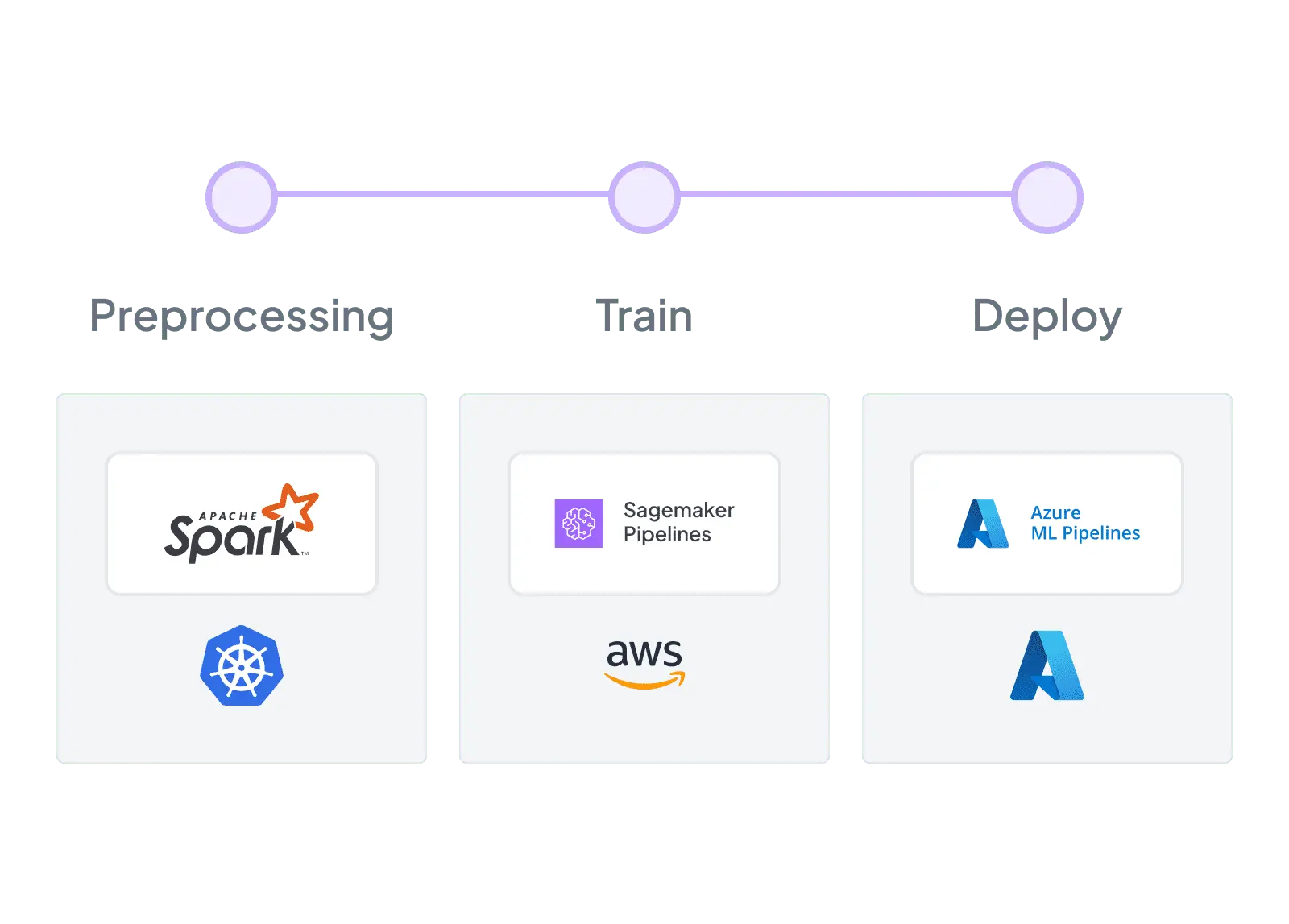
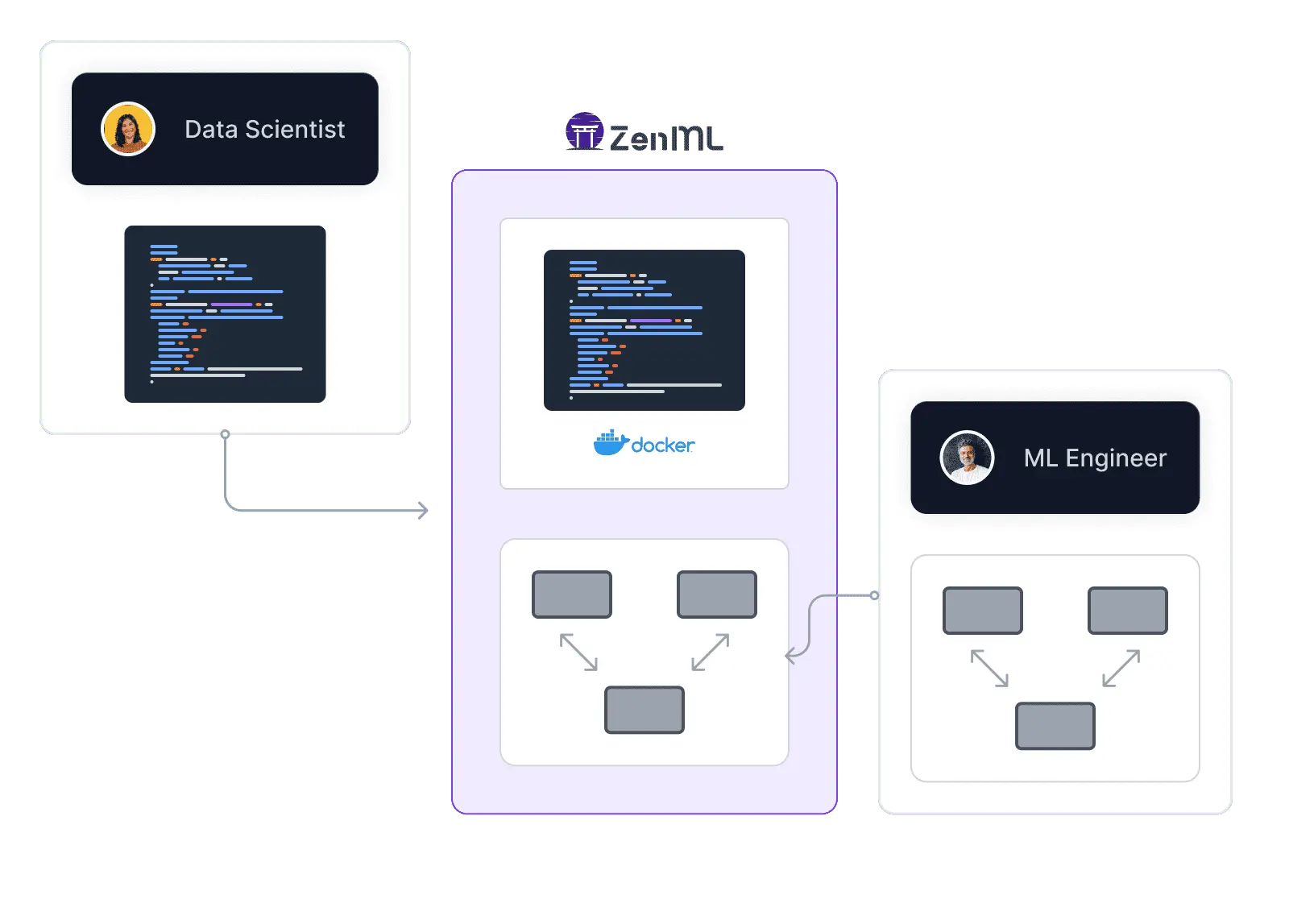

Our data scientists are now autonomous in writing their pipelines & putting it in prod, setting up data-quality gates & alerting easily

François Serra
ML Engineer / ML Ops / ML Solution architect at ADEO Services
| Feature | ZenML | Domino Data Lab |
|---|---|---|
| Workflow Orchestration | Yes Provides portable, code-defined pipelines that run on any orchestrator (Airflow, Kubeflow, local, etc.) via composable stacks | Yes Offers Domino Flows (built on Flyte) with DAG orchestration, lineage tracking, and a platform monitoring UI |
| Integration Flexibility | Yes Designed to integrate with any ML tool — swap orchestrators, trackers, artifact stores, and deployers without changing pipeline code | Not supported Broad enterprise integrations (Snowflake, Spark, MLflow, SageMaker), but consumed through Domino's platform abstraction |
| Vendor Lock-In | Yes Open-source and vendor-neutral — pipelines are pure Python code portable across any infrastructure | Not supported Proprietary platform with moderate lock-in; uses Flyte and MLflow internally but ties workflows to Domino's control plane |
| Setup Complexity | Yes Pip-installable, start locally with minimal infrastructure — scale by connecting to cloud compute when ready | Not supported Enterprise deployment spectrum from SaaS to on-prem/hybrid, requiring Platform Operator and Kubernetes infrastructure |
| Learning Curve | Yes Familiar Python-based pipeline definitions with simple decorators; fewer platform concepts to learn | Yes Cohesive UI lowers barrier for data scientists, but many platform concepts (Projects, Workspaces, Jobs, Flows, Governance) |
| Scalability | Yes Scales via underlying orchestrator and infrastructure — leverage Kubernetes, cloud services, or distributed compute | Yes Enterprise-grade scaling with hardware tiers, distributed clusters (Spark/Ray/Dask), and multi-region data planes |
| Cost Model | Yes Open-source core is free — pay only for infrastructure. Optional managed service for enterprise features | Not supported Enterprise subscription pricing geared toward large organizations, with deployment options ranging from SaaS to on-prem |
| Collaborative Development | Yes Collaboration through code sharing, version control, and the ZenML dashboard for pipeline visibility | Yes Strong collaboration with shared Projects, interactive Workspaces, project templates, and model cards |
| ML Framework Support | Yes Framework-agnostic — use any Python ML library in pipeline steps with automatic artifact serialization | Yes Containerized environments support any framework; validated for scikit-learn, PyTorch, Spark, Ray, and more |
| Model Monitoring & Drift Detection | Yes Integrates with monitoring tools like Evidently and Great Expectations as pipeline steps for customizable drift detection | Yes Built-in monitoring with statistical tests (KL divergence, PSI, Chi-square), scheduled checks, and alerting |
| Governance & Access Control | Yes Pipeline-level lineage, artifact tracking, RBAC, and model control plane for audit trails and approval workflows | Yes Enterprise-grade governance with policy management, automated evidence collection, unified audit trail, and compliance certifications |
| Experiment Tracking | Yes Integrates with any experiment tracker (MLflow, W&B, etc.) as part of your composable stack | Yes MLflow-backed experiment tracking with autologging and manual logging, integrated into the platform UI |
| Reproducibility | Yes Auto-versioned code, data, and artifacts for every pipeline run — portable reproducibility across any infrastructure | Yes Strong reproducibility via environment snapshots, Flows lineage/versioning, and Git-based projects |
| Auto Retraining Triggers | Yes Supports scheduled pipelines and event-driven triggers that can initiate retraining based on drift detection or performance thresholds | Yes Scheduled Jobs and Flows with API-driven triggers; requires wiring monitoring alerts to job/flow execution |
Code comparison
from zenml import pipeline, step, Model
from sklearn.ensemble import RandomForestClassifier
from sklearn.metrics import accuracy_score
import pandas as pd

@step
def ingest_data() -> pd.DataFrame:
    return pd.read_csv("data/dataset.csv")

@step
def train_model(df: pd.DataFrame) -> RandomForestClassifier:
    X, y = df.drop("target", axis=1), df["target"]
    model = RandomForestClassifier(n_estimators=100)
    model.fit(X, y)
    return model

@step
def evaluate(model: RandomForestClassifier, df: pd.DataFrame) -> float:
    X, y = df.drop("target", axis=1), df["target"]
    return float(accuracy_score(y, model.predict(X)))

@step
def check_drift(df: pd.DataFrame) -> bool:
    # Plug in Evidently, Great Expectations, etc.
    return detect_drift(df)

@pipeline(model=Model(name="my_model"))
def ml_pipeline():
    df = ingest_data()
    model = train_model(df)
    accuracy = evaluate(model, df)
    drift = check_drift(df)

# Runs on any orchestrator (local, Airflow, Kubeflow),
# auto-versions all artifacts, and stays fully portable
# across clouds — no platform lock-in
ml_pipeline()# Domino Data Lab platform workflow
# Runs inside Domino's managed environment
import mlflow
import pandas as pd
from sklearn.ensemble import RandomForestClassifier
from sklearn.metrics import accuracy_score
# MLflow tracking is pre-configured in Domino
mlflow.autolog()
# Data loaded from Domino datasets or mounted volumes
df = pd.read_csv("/domino/datasets/local/dataset.csv")
X, y = df.drop("target", axis=1), df["target"]
with mlflow.start_run():
model = RandomForestClassifier(n_estimators=100)
model.fit(X, y)
acc = accuracy_score(y, model.predict(X))
mlflow.log_metric("accuracy", acc)
mlflow.sklearn.log_model(
model, "model",
registered_model_name="my_model"
)
print(f"Accuracy: {acc}")
# Multi-step orchestration uses Domino Flows (Flyte-based)
# defined separately. Monitoring, drift detection, and
# retraining configured through Domino's platform UI.
# Runs only within the Domino platform environment.ZenML is fully open-source and vendor-neutral, letting you avoid the significant licensing costs and platform lock-in of proprietary enterprise platforms. Your pipelines remain portable across any infrastructure, from local development to multi-cloud production.
ZenML offers a pip-installable, Python-first approach that lets you start locally and scale later. No enterprise deployment, platform operators, or Kubernetes clusters required to begin — build production-grade ML pipelines in minutes, not weeks.
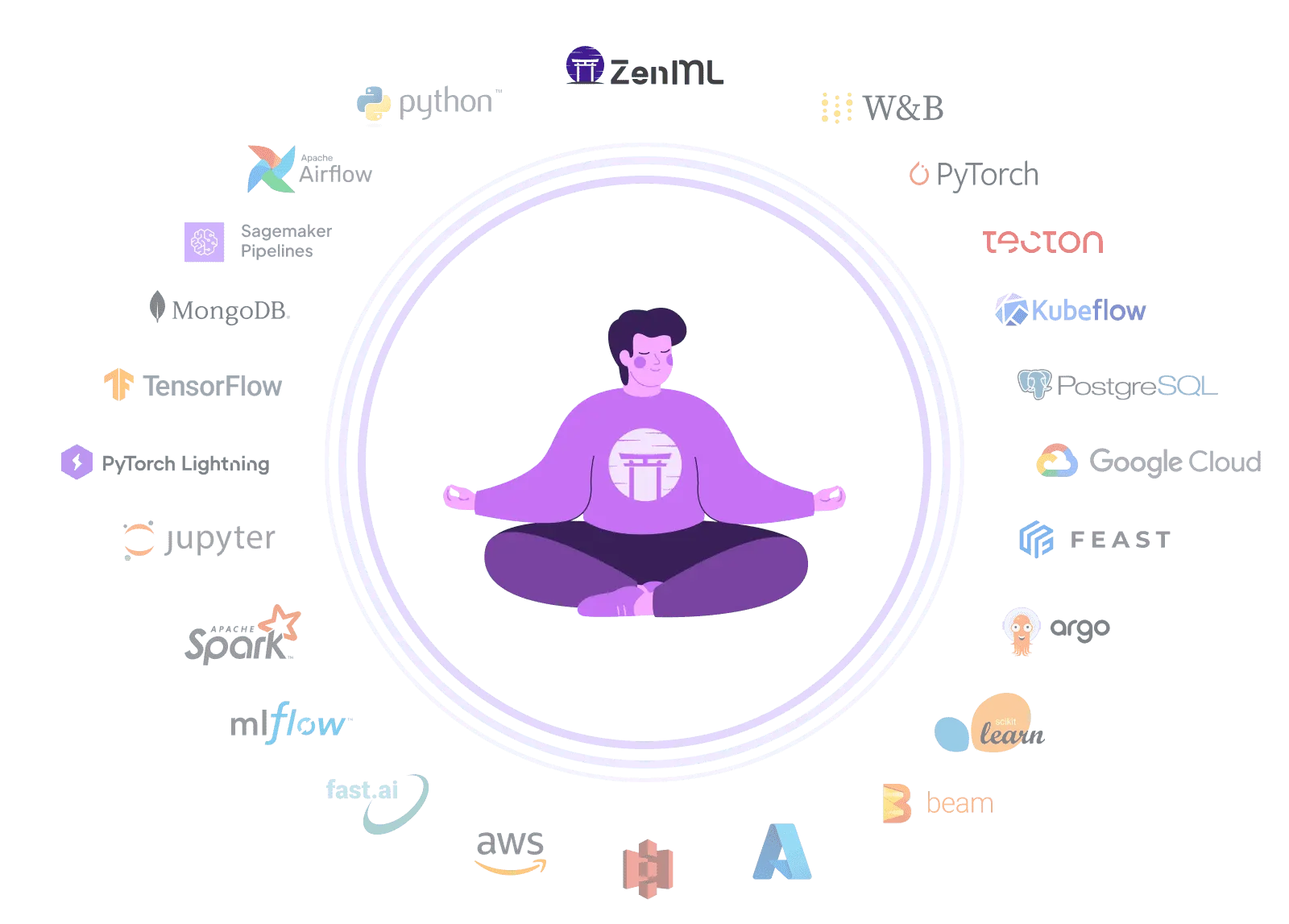
ZenML's composable stack lets you choose your own orchestrator, experiment tracker, artifact store, and deployer. Swap components freely without re-platforming — your pipelines adapt to your toolchain, not the other way around.
E2E Platform Showdown

Alteryx alternative for ML pipelines: open-source, code-first MLOps with vendor-neutral portability. Build production ML workflows that run anywhere

Vendor-neutral ML orchestration. Build, train, and deploy models across environments with flexible workflows and no cloud lock-in.

Looking for an open-source alternative to Azure ML Pipelines? ZenML builds portable ML pipelines across clouds without vendor lock-in.

ClearML alternative: Flexible MLOps framework with extensive integrations. Accelerate ML development using adaptable architecture and reduced lock-in, while simplifying infrastructure setup.

Dataiku alternative: Open-source MLOps framework with portable Python pipelines and composable stack. Build production ML workflows with vendor-neutral flexibility and best-of-breed tool integration

Metaflow alternative: Flexible ML orchestration with comprehensive MLOps. Accelerate ML using adaptable architecture and seamless integrations.

Valohai alternative: Open-source MLOps framework with extensive integrations. Accelerate ML development using Python-based SDK, adaptable architecture, and existing infrastructure, while avoiding vendor lock-in.

ZenML: an open-source alternative to Vertex AI Pipelines that keeps your MLOps stack portable across GCP, AWS, Azure, and on-prem
How we evaluated sandbox providers for coding agents, what we chose for now, and the trade-offs behind that decision.
The new Kitaru turns production traces you already collect into replayable test scenarios, expert-reviewed cohorts, and evaluators you can run on every change.
Robotics compute is spreading across clouds and clusters. Learn how one portable pipeline layer can keep the robot-learning loop reproducible.
Explore how ZenML's open-source framework can simplify your ML workflows with a flexible, start-free approach Discover the ease of building reproducible, production-grade pipelines with familiar Python code Learn how to compose your ideal ML stack while maintaining full portability across clouds and tools