We explore how successful LLMOps implementation depends on human factors beyond just technical solutions. It addresses common challenges like misaligned executive expectations, siloed teams, and subject-matter expert resistance that often derail AI initiatives. The piece offers practical strategies for creating effective team structures (hub-and-spoke, horizontal teams, cross-functional squads), improving communication, and integrating domain experts early. With actionable insights from companies like TomTom, Uber, and Zalando, readers will learn how to balance technical excellence with organizational change management to unlock the full potential of generative AI deployments.
The OpenPipe integration in ZenML bridges the complexity of large language model fine-tuning, enabling enterprises to create tailored AI solutions with unprecedented ease and reproducibility.
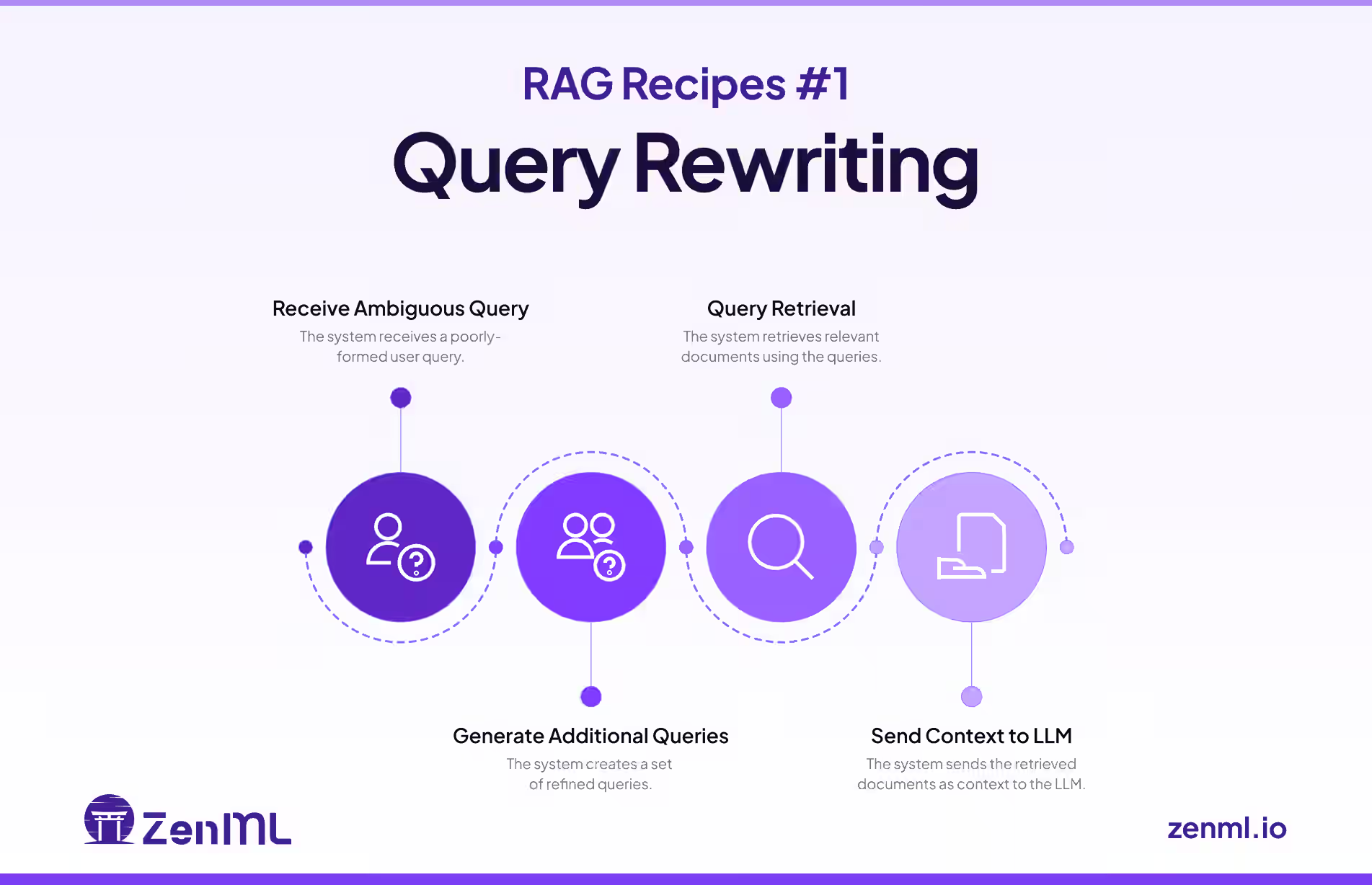
Are your query rewriting strategies silently hurting your Retrieval-Augmented Generation (RAG) system? Small but unnoticed query errors can quickly degrade user experience, accuracy, and trust. Learn how ZenML's automated evaluation pipelines can systematically detect, measure, and resolve these hidden issues—ensuring that your RAG implementations consistently provide relevant, trustworthy responses.
Discover the new ZenML MCP Server that brings conversational AI to ML pipelines. Learn how this implementation of the Model Context Protocol allows natural language interaction with your infrastructure, enabling query capabilities, pipeline analytics, and run management through simple conversation. Explore current features, engineering decisions, and future roadmap for this timely addition to the rapidly evolving MCP ecosystem.
The rise of Generative AI has shifted the roles of AI Engineering and ML Engineering, with AI Engineers integrating generative AI into software products. This shift requires clear ownership boundaries and specialized expertise. A proposed solution is layer separation, separating concerns into two distinct layers: Application (AI Engineers/Software Engineers), Frontend development, Backend APIs, Business logic, User experience, and ML (ML Engineers). This allows AI Engineers to focus on user experience while ML Engineers optimize AI systems.
A comprehensive overview of lessons learned from the world's largest database of LLMOps case studies (457 entries as of January 2025), examining how companies implement and deploy LLMs in production. Through nine thematic blog posts covering everything from RAG implementations to security concerns, this article synthesizes key patterns and anti-patterns in production GenAI deployments, offering practical insights for technical teams building LLM-powered applications.


.png)
%20(1).png)


.jpeg)