287 latest curated summaries of LLMOps use cases in industry, from tech to healthcare to finance and more. This blog also highlights some of the trends observed across the case studies.
We're expanding ZenML beyond its original MLOps focus into the LLMOps space, recognizing the same fragmentation patterns that once plagued traditional machine learning operations. We're developing three core capabilities: native LLM components that provide unified APIs and management across providers like OpenAI and Anthropic, along with standardized prompt versioning and evaluation tools; applying established MLOps principles to agent development to bring systematic versioning, evaluation, and observability to what's currently a "build it and pray" approach; and enhancing orchestration to support both LLM framework integration and direct LLM calls within workflows. Central to our philosophy is the principle of starting simple before going autonomous, emphasizing controlled workflows over fully autonomous agents for enterprise production environments, and we're actively seeking community input through a survey to guide our development priorities, recognizing that today's infrastructure decisions will determine which organizations can successfully scale AI deployment versus remaining stuck in pilot phases.
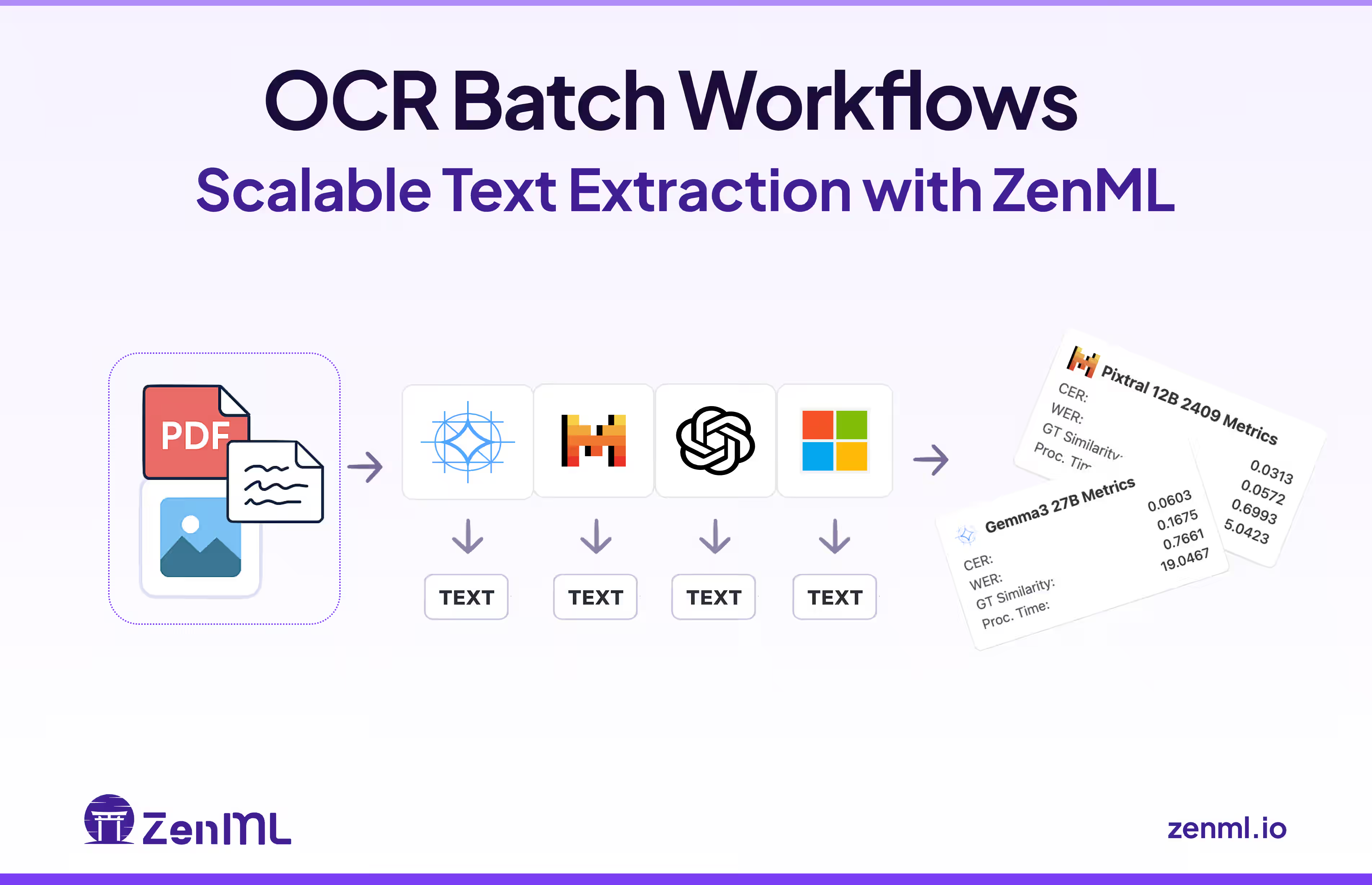
How do you reliably process thousands of diverse documents with GenAI OCR at scale? Explore why robust workflow orchestration is critical for achieving reliability in production. See how ZenML was used to build a scalable, multi-model batch processing system that maintains comprehensive visibility into accuracy metrics. Learn how this approach enables systematic benchmarking to select optimal OCR models for your specific document processing needs.