















Choosing a sandbox runtime for long-lived coding agents
How we evaluated sandbox providers for coding agents, what we chose for now, and the trade-offs behind that decision.
orchestrators
If you're using Argo Workflows for training and evaluation jobs, you already know it's great at orchestrating containers on Kubernetes. What it doesn't give you is the ML lifecycle layer: experiment tracking, artifact lineage, and reproducible, comparable pipeline runs. ZenML brings an ML-native layer, so your team spends less time wiring tools together and more time shipping reliable models.
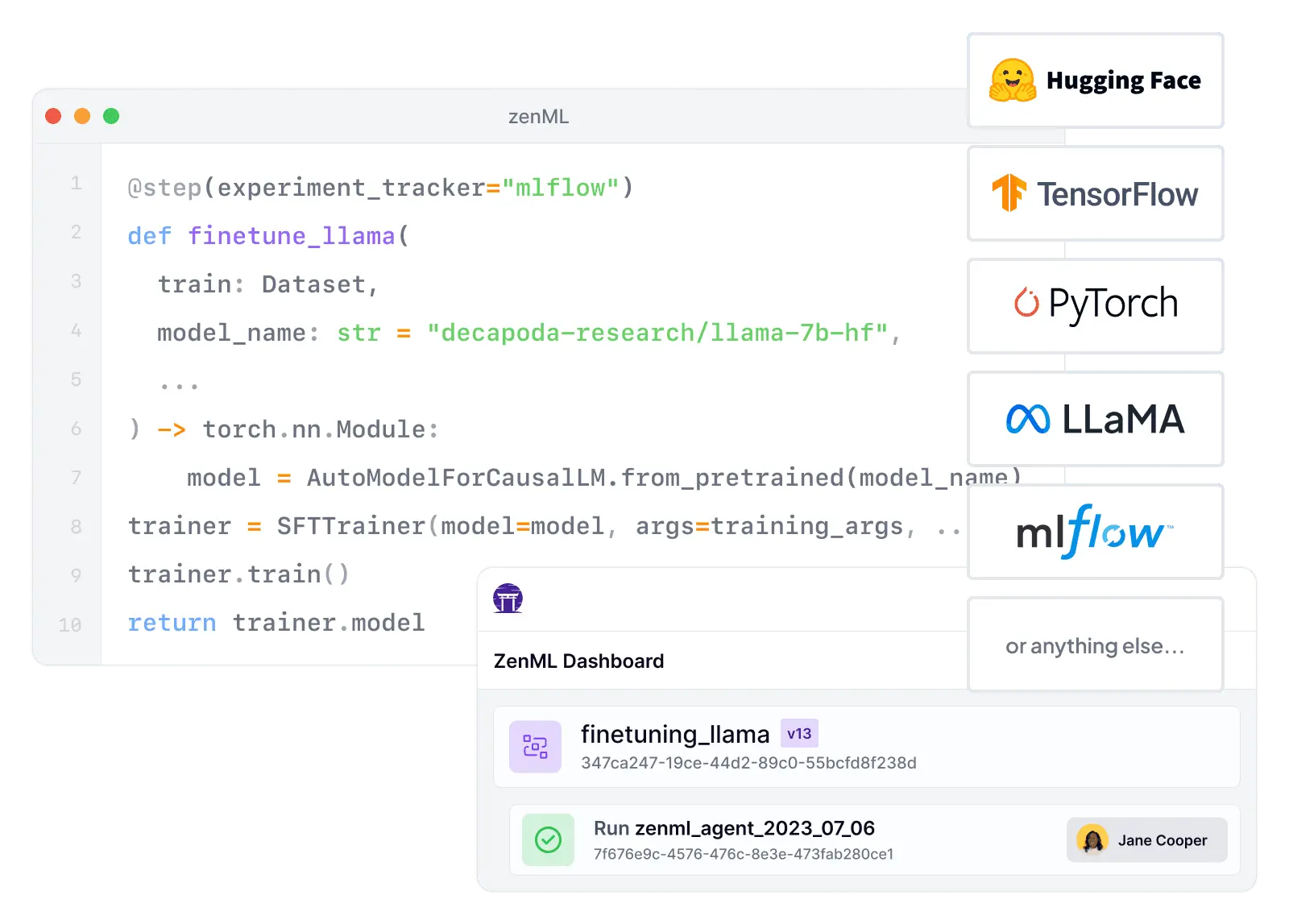
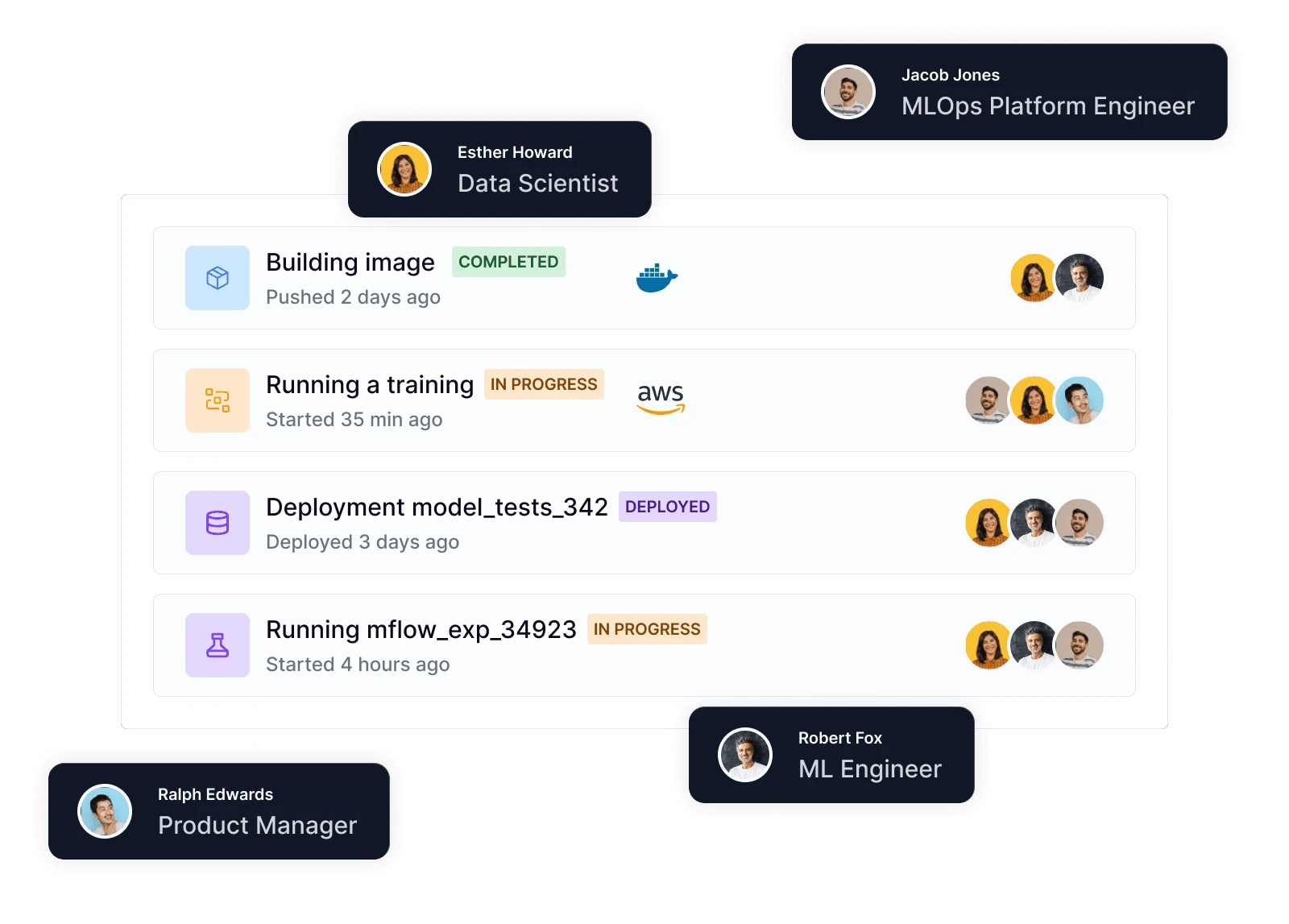
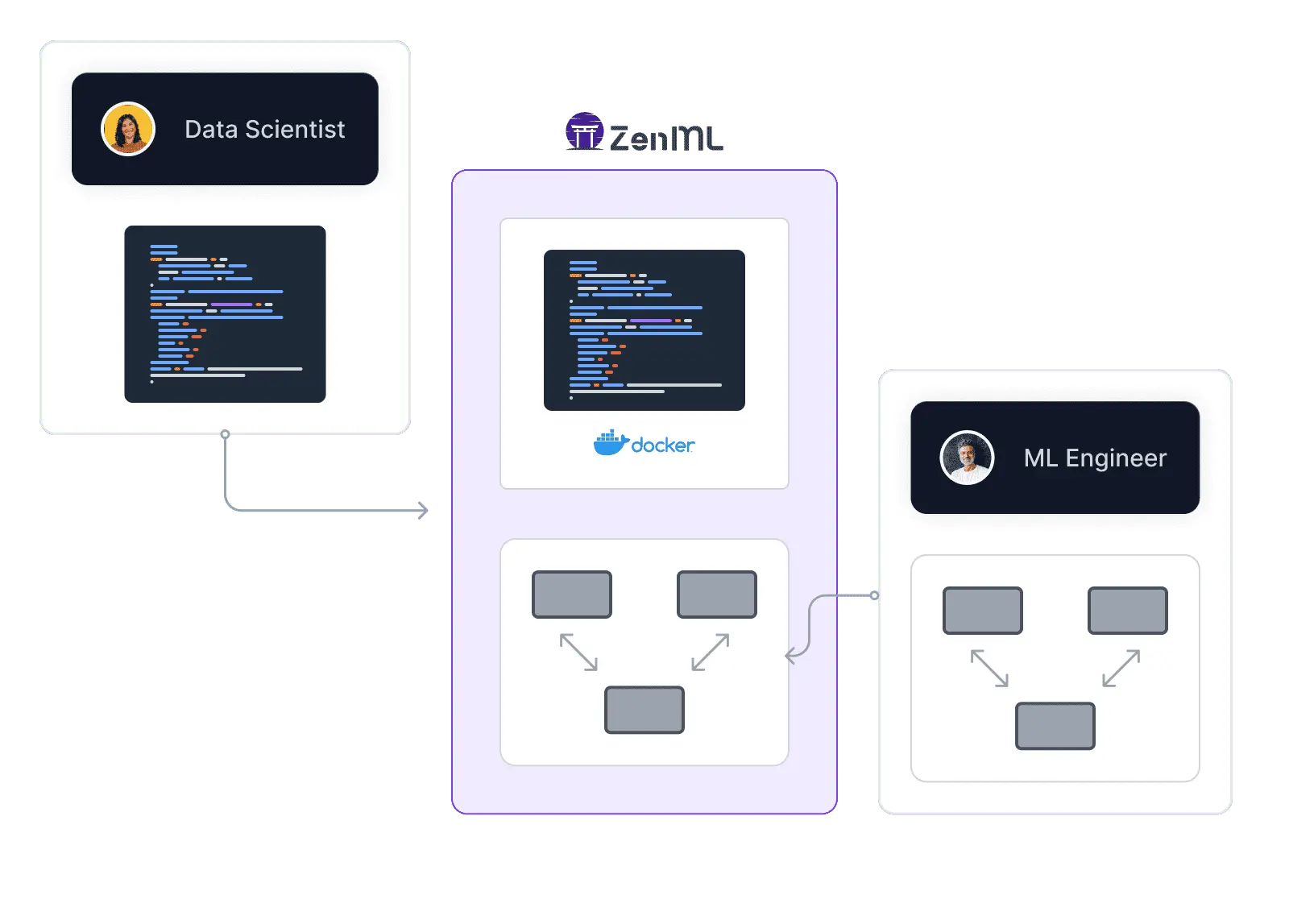

ZenML has proven to be a critical asset in our machine learning toolbox, and we are excited to continue leveraging its capabilities to drive ADEO's machine learning initiatives to new heights

François Serra
ML Engineer / ML Ops / ML Solution architect at ADEO Services
| Feature | ZenML | Argo Workflows |
|---|---|---|
| Workflow Orchestration | Yes ML-native pipelines with portable execution via stacks, while still supporting Kubernetes-based orchestration when needed |
Yes Kubernetes-native workflow engine with mature DAG/steps execution, retries, scheduling, and strong operational controls on K8s |
| Integration Flexibility | Yes Composable stack with 50+ MLOps integrations — swap orchestrators, trackers, and deployers without code changes |
Yes Runs virtually any containerized tool, but integrations are DIY — teams wire credentials, storage, and conventions manually |
| Vendor Lock-In | Yes Cloud-agnostic by design — stacks make it easy to switch infrastructure providers and tools as needs change |
Yes Runs on any Kubernetes cluster and is CNCF-governed open source — lock-in is primarily to Kubernetes itself, not a specific cloud |
| Setup Complexity | Yes pip install zenml — start locally and scale up by swapping stacks, avoiding immediate Kubernetes dependency |
Not supported Requires Kubernetes cluster plus Argo installation, RBAC config, artifact repository, and optional database for full value |
| Learning Curve | Yes Python-first and ML-first — reduces cognitive load for ML engineers who don't want to become Kubernetes experts |
Not supported Assumes Kubernetes fluency (CRDs, pods, namespaces, service accounts, storage) — ML teams often need platform help to adopt it |
| Scalability | Yes Delegates compute to scalable backends — Kubernetes, Spark, cloud ML services — for unlimited horizontal scaling |
Yes Built for parallel job orchestration on Kubernetes with parallelism limits, retries, and workflow offloading for large DAGs |
| Cost Model | Yes Open-source core is free — pay only for your own infrastructure, with optional managed cloud for enterprise features |
Yes Apache-2.0 and CNCF-governed with no per-seat or per-run pricing — costs are Kubernetes infrastructure and operations |
| Collaboration | Yes Code-native collaboration through Git, CI/CD, and code review — ZenML Pro adds RBAC, workspaces, and team dashboards |
Not supported UI and SSO support for multi-user setups, but collaboration is centered on workflow execution and logs — not ML experiment sharing |
| ML Frameworks | Yes Use any Python ML framework — TensorFlow, PyTorch, scikit-learn, XGBoost, LightGBM — with native materializers and tracking |
Yes Framework-agnostic at the runtime level — if it runs in a container on Kubernetes, Argo can orchestrate it |
| Monitoring | Yes Integrates Evidently, WhyLogs, and other monitoring tools as stack components for automated drift detection and alerting |
Not supported Monitors workflow execution well (statuses, logs, Prometheus metrics), but no production model monitoring or ML drift detection built in |
| Governance | Yes ZenML Pro provides RBAC, SSO, workspaces, and audit trails — self-hosted option keeps all data in your own infrastructure |
Yes Kubernetes-centric governance with namespacing, RBAC, and workflow archiving — but ML-specific audit trails require external systems |
| Experiment Tracking | Yes Native metadata tracking plus seamless integration with MLflow, Weights & Biases, Neptune, and Comet for rich experiment comparison |
Not supported No built-in experiment tracking — teams embed MLflow or W&B inside containers and standardize conventions manually |
| Reproducibility | Yes Automatic artifact versioning, code-to-Git linking, and containerized execution guarantee reproducible pipeline runs |
Not supported Workflows are rerunnable, but reproducibility depends on pinned containers, data versioning, and discipline — not enforced by default |
| Auto-Retraining | Yes Schedule pipelines via any orchestrator or use ZenML Pro event triggers for drift-based automated retraining workflows |
Yes CronWorkflows and webhook triggers enable automated retraining runs — model promotion and registry logic left to your stack |
Code comparison
from zenml import pipeline, step, Model
from zenml.integrations.mlflow.steps import (
    mlflow_model_deployer_step,
)
import pandas as pd
from sklearn.ensemble import RandomForestRegressor
from sklearn.metrics import mean_squared_error
import numpy as np

@step
def ingest_data() -> pd.DataFrame:
    return pd.read_csv("data/dataset.csv")

@step
def train_model(df: pd.DataFrame) -> RandomForestRegressor:
    X, y = df.drop("target", axis=1), df["target"]
    model = RandomForestRegressor(n_estimators=100)
    model.fit(X, y)
    return model

@step
def evaluate(model: RandomForestRegressor, df: pd.DataFrame) -> float:
    X, y = df.drop("target", axis=1), df["target"]
    preds = model.predict(X)
    return float(np.sqrt(mean_squared_error(y, preds)))

@step
def check_drift(df: pd.DataFrame) -> bool:
    # Plug in Evidently, Great Expectations, etc.
    return detect_drift(df)

@pipeline(model=Model(name="my_model"))
def ml_pipeline():
    df = ingest_data()
    model = train_model(df)
    rmse = evaluate(model, df)
    drift = check_drift(df)

# Runs on any orchestrator, logs to MLflow,
# tracks artifacts, and triggers retraining — all
# in one portable, version-controlled pipeline
ml_pipeline()from hera.workflows import Steps, Workflow, WorkflowsService, script
@script()
def preprocess() -> str:
print("s3://ml-artifacts/datasets/processed.csv")
@script()
def train(data_uri: str) -> str:
print("s3://ml-artifacts/models/model.pkl")
@script()
def evaluate(model_uri: str):
print(f"evaluating {model_uri}")
with Workflow(
generate_name="ml-train-eval-",
entrypoint="steps",
namespace="argo",
workflows_service=WorkflowsService(
host="https://localhost:2746"
),
) as w:
with Steps(name="steps"):
data = preprocess()
model = train(arguments={"data_uri": data.result})
evaluate(arguments={"model_uri": model.result})
w.create()
# Requires Kubernetes cluster + Argo installation.
# No built-in experiment tracking, model registry,
# artifact lineage, or reproducibility guarantees.
# ML lifecycle layers must be built separately.ZenML is fully open-source and vendor-neutral, letting you avoid the significant licensing costs and platform lock-in of proprietary enterprise platforms. Your pipelines remain portable across any infrastructure, from local development to multi-cloud production.
ZenML offers a pip-installable, Python-first approach that lets you start locally and scale later. No enterprise deployment, platform operators, or Kubernetes clusters required to begin — build production-grade ML pipelines in minutes, not weeks.
ZenML's composable stack lets you choose your own orchestrator, experiment tracker, artifact store, and deployer. Swap components freely without re-platforming — your pipelines adapt to your toolchain, not the other way around.
Orchestrator Showdown

ML-optimized workflow management. Enhance scalability and usability with comprehensive features designed for ML pipeline orchestration.

Dagster alternative: Streamline ML ops with intuitive pipelines. Seamless integrations and experiment tracking for efficient ML workflow management.
Databricks alternative: Flexible ML orchestration without vendor lock-in. Accelerate ML with lightweight, adaptable workflows across multiple clouds.

Flyte alternative: Agile ML pipeline orchestration. Accelerate workflows with intuitive tools, seamless MLOps integration, and rapid iteration.

Kedro alternative: Scalable, user-friendly ML framework. Streamline operations with robust features for efficient project management and deployment.
Kubeflow alternative: Lightweight ML pipeline management. Simplify MLOps with flexible, user-friendly workflows across various environments.

Prefect alternative: ML-centric pipeline orchestration. Streamline workflows with intuitive design, experiment tracking, and MLOps integrations.
How we evaluated sandbox providers for coding agents, what we chose for now, and the trade-offs behind that decision.
The new Kitaru turns production traces you already collect into replayable test scenarios, expert-reviewed cohorts, and evaluators you can run on every change.
Robotics compute is spreading across clouds and clusters. Learn how one portable pipeline layer can keep the robot-learning loop reproducible.
See how ZenML adds ML-native metadata, lineage, artifact tracking, and more on top of your existing Kubernetes infrastructure Explore Kubernetes-friendly execution without writing everything as CRDs and YAML: keep your workflow logic Python-first Learn how ZenML's stack approach plugs into experiment trackers and deployers so you don't have to build an MLOps platform around Argo