
Deploy Scalable, Production-Ready ML Models with Databricks and ZenML
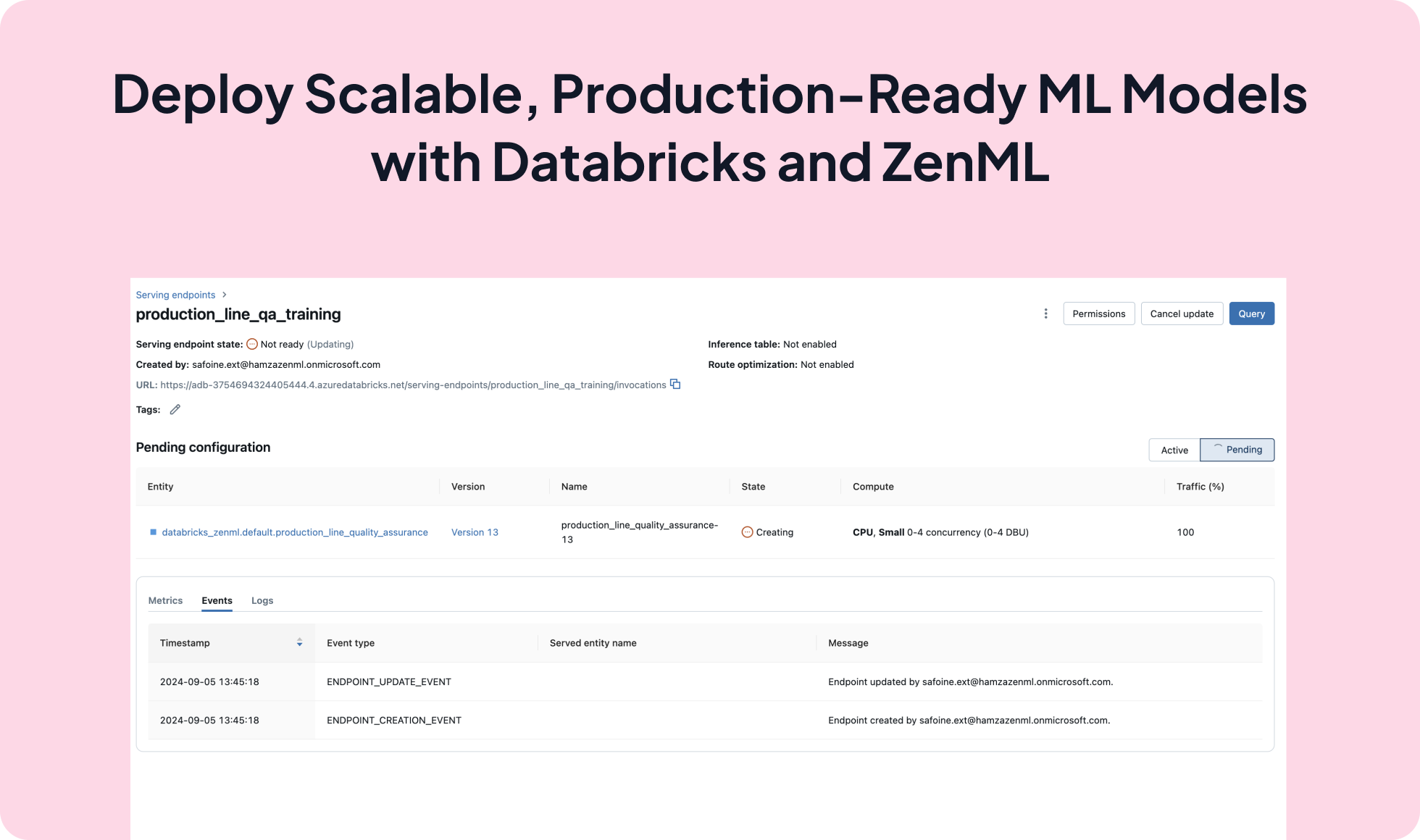
Integrate Databricks Model Serving with ZenML to deploy and serve AI models effortlessly. This integration provides a unified interface to deploy, govern, and query models, leveraging Databricks' managed infrastructure for scalability and enterprise security.
from zenml.integrations.databricks.steps.databricks_deployer import databricks_model_deployer_step

@step(enable_cache=False)
def deployment_deploy() -> (
    Annotated[
        Optional[DatabricksDeploymentService],
        ArtifactConfig(
            name="databricks_deployment", is_deployment_artifact=True
        ),
    ]
):
    # deploy predictor service
    zenml_client = Client()
    model_deployer = zenml_client.active_stack.model_deployer
    databricks_deployment_config = DatabricksDeploymentConfig(
        model_name=model.name,
        model_version=model.run_metadata["model_registry_version"].value,
        workload_size="Small",
        workload_type="CPU",
        scale_to_zero_enabled=True,
        endpoint_secret_name="databricks_token",
    )
    deployment_service = model_deployer.deploy_model(
        config=databricks_deployment_config,
        service_type=DatabricksDeploymentService.SERVICE_TYPE,
        timeout=1200,
    )
    logger.info(
        f"The deployed service info: {model_deployer.get_model_server_info(deployment_service)}"
    )
    return deployment_service


@pipeline(on_failure=notify_on_failure)
def databricks_deploy_pipeline():
    deployment_deploy()
    notify_on_success(after=["deployment_deploy"])

databricks_deploy_pipeline().run()
Expand your ML pipelines with more than 50 ZenML Integrations